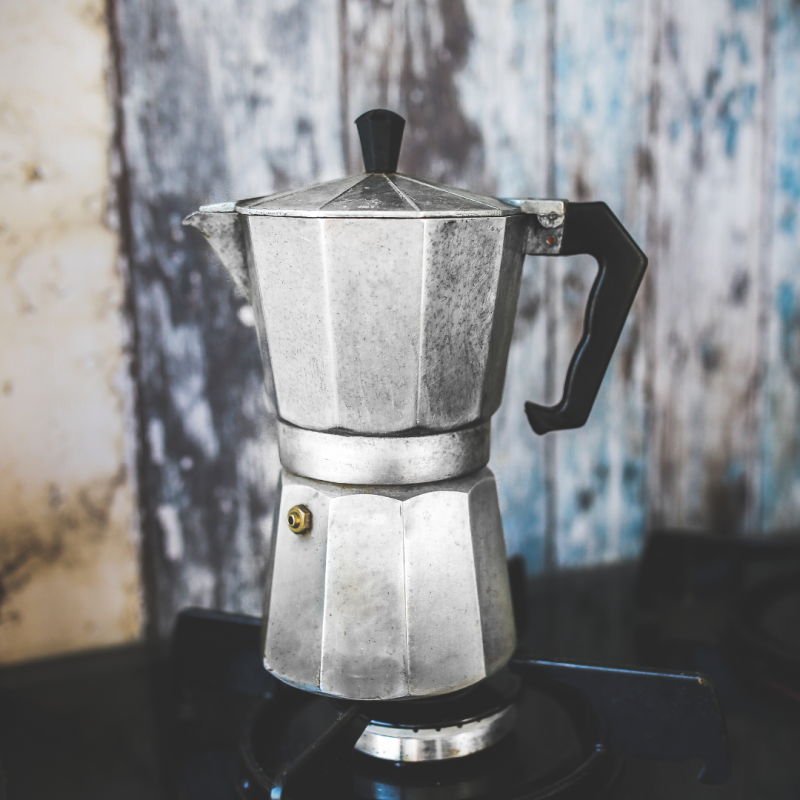
The bag you bought on Saturday at the Marché de l'Abattoir and opened on Sunday morning probably gave you the thickest espresso crema you have ever pulled at home. Then you drink, and the shot is sour. Today's myth says thick crema automatically means good espresso. Crema tells you something about the beans, and the taste you find with a spoon.
What espresso crema is made of
In the machine, water goes through the coffee under high pressure and dissolves the carbon dioxide left in the beans after roasting. When the liquid reaches the cup, the pressure drops at once and the gas comes out as tiny bubbles. The oils and dissolved solids from the coffee hold them in place for a few minutes. That is crema: gas and oil.
So what does crema mean? Its thickness depends on things that have little to do with taste: how much gas is left in the bean, the species and the basket in your machine. Robusta, for example, makes more crema than arabica. More on robusta in a blend tomorrow; for now it is in the coffee from Vietnam.
Anyone in Brussels knows the idea from beer: the head shows how it was poured, and you judge the taste below it. For espresso, the word "crema" reportedly appeared around 1938, with the patent Achille Gaggia, a Milan bar owner, filed for his Sistema Lampo prototype. Since then, the foam has been sold as a sign of quality.
Why a fresh bag gives the thickest espresso crema
At the stall, you buy beans a few hours after Laurent takes them out of Golden. A young bean is full of gas. In espresso, that gas swells the puck and lets water run along the edge: the shot flows fast, tastes sour and carries a spectacular crema. Perfect Daily Grind writes that too much crema usually points to beans that are too fresh, with a harsh taste.
That is why we tell you at the stall to let the bag rest: for freshly roasted coffee for espresso, from 7 days, as in our guide to resting coffee after roasting. An example from the product pages: the Blend Maison and the coffee from Vietnam were roasted on Saturday 10 October. Today they are four days old, so for espresso they wait until the weekend.
What espresso crema tastes like: the three-spoon test
Scott Rao, author of books on espresso and roasting, wrote in June 2026 that crema is bitter, sour, chewy and often roasty. James Hoffmann said it back in 2009, in three words: "crema is rubbish".
Pull one espresso with your usual recipe. You need three teaspoons and a glass of water.
- With the first spoon, take only crema from the top and taste.
- Rinse your mouth with water. With the second spoon, go through the crema, take liquid from the middle of the cup and taste.
- Stir what is left and taste with the third spoon.
How to read the result:
- Bitter crema, sweet liquid below: the shot is good, the crema was covering it. Stir before you drink or skim the crema off with the spoon.
- Espresso with lots of crema but sour below too, and a shot that ran fast: check the roast date. Under 7 days, the bean still holds too much gas.
- Bitter, dry liquid under a pretty crema: the problem is in the grinder. Try one step coarser, as we explain for grinding too fine.
Espresso crema from a pressurized basket
Many home machines come with a double-wall basket, called pressurized. The coffee sits in the inner basket and all the liquid leaves through a single small hole in the bottom of the outer one. The foam forms there, from the speed of the jet, even with coffee ground months ago, so with a pressurized basket you judge by taste alone.
How to spot one: turn the basket over and look at the bottom. A single hole means pressurized, dozens of holes mean a standard basket. If you own a grinder and your machine came with both, use the standard basket for fresh beans. If crema disappears fast on a standard basket, tearing open in under a minute, check the date on the bag.
The espresso crema diary: one bag, three mornings
From the same bag, pull an espresso on day 4, day 8 and day 14 after roasting. Same recipe each time: 18 g of coffee in the basket, 36 g in the cup, between 25 and 30 seconds. Write three things on the bag: how many seconds the shot ran, how tall the crema stands after one minute and how the liquid below it tastes.
The day the crema turned lower and finer, and the taste below turned sweeter, is the day you start from next time with the same lot. Laurent adjusts the fire and timing on Golden to each weekend's air to hold the same taste target for each coffee. The targets differ from one coffee to the next, and a darker roast, like the one on the coffee from Vietnam, loses its gas faster than a light one. So redo the diary with every new bag.
Try the three-spoon test tomorrow morning and tell us what came out. You will find us on Saturday and Sunday at the Marché de l'Abattoir, at the exit of the Manufakture car park, Anderlecht, next to Golden. The roast date is also on the page of each coffee in the shop.
Brut. Sauvage. Imprévisible.