
If you've ever said a coffee was "a bit sour", you may have been right. You may also have tasted exactly what was meant to be in the cup. Sour vs acidic coffee: the two words sound like synonyms, and in coffee they name two different tastes. The difference tells you where to look. Below are the signs, the causes and a two-cup test you can run tomorrow morning.
Sour vs acidic coffee: how to tell them apart in your mouth
Acidity in coffee is a quality of the bean. It comes from acids the coffee brings from the farm, such as citric and malic acid, and a lighter roast keeps them. Last week we wrote about where the fruit in Ethiopian coffee comes from, so here we stay with taste.
You can spot an acidic coffee like this:
- your mouth waters, like after a bite of apple;
- the feeling passes quickly and leaves something sweet at the end;
- you can name it after a fruit: lemon, orange, blackcurrant, green apple.
Sourness is acid left on its own, without the sweetness that should sit next to it. Its signs:
- it puckers your mouth and stays on your tongue;
- the cup feels thin, like coloured water;
- it reminds you more of vinegar or unripe fruit than ripe fruit.
Brussels is the home of gueuze, a beer that is sour on purpose. In coffee, sourness almost always means something stopped too early.
Sour vs acidic coffee: why does my coffee taste sour, the cup or the roast
There are two places where something can stop too early.
In the cup. Water pulls flavour out of coffee in an order: acids first, then sugars, bitterness last. Under-extracted coffee is coffee the water left after the first step. The usual causes are a grind that is too coarse, water below 90°C and a contact time that is too short. A dose that is too big for the same amount of water does the same thing, as we showed yesterday in the piece on too much coffee. A sour espresso that runs in under 20 seconds is the same case, under pressure.
At the roast. An underdeveloped roast leaves the drum before the sugars in the bean have had time to change. Its sourness comes with grass, hay or raw cereal. That kind stays at every grinder setting, because the sweetness that should balance it is missing from the bean itself.
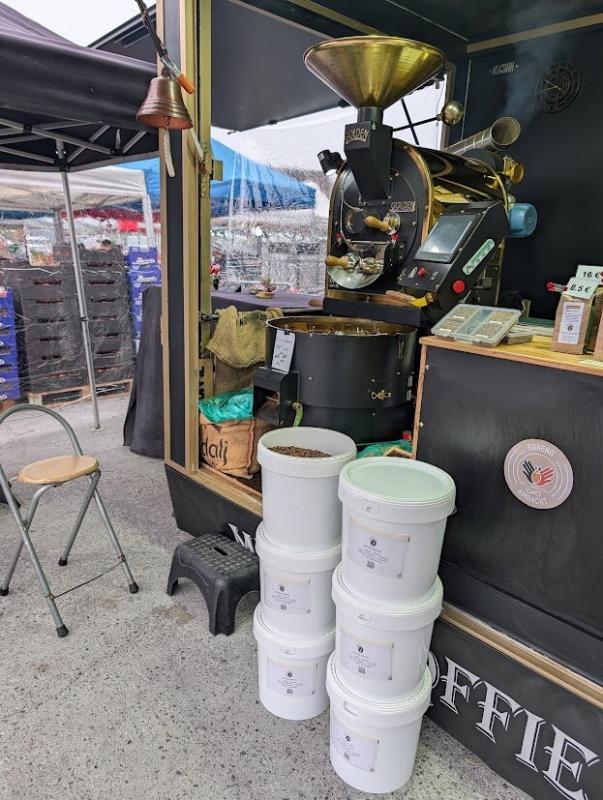
At Golden, that moment is Laurent's call. For filter batches he cuts the flame earlier than for espresso, to keep the fruit (here's where and why). The margin is a few seconds: a little too early and the same batch moves from acidic to sour. When the air at the market changes from one Saturday to the next, Laurent reads the weather and adjusts the flame and the timing so the bean reaches the same point.
The two-cup test for sour vs acidic coffee
You need one bag, a scale and a grinder with settings.
1. Same recipe for both cups: 15 g coffee, 250 g water at 93°C. 2. Cup A: your usual grind. Cup B: one step finer. 3. Before you pour the water, smell the dry ground coffee. 4. Leave both cups for 5 minutes so they reach the same temperature, then taste them one after the other.
How to read the result:
- B is sweeter and the sourness is gone. The sourness came from the cup. Stay on the new setting.
- B is more bitter, the sourness is still there, and the dry grounds smelled of grass or hay. The sourness comes from the roast.
- Both are lively, taste of fruit and finish sweet. That's acidity. If you want a low acid coffee, pick a batch roasted for espresso or an origin like Brazil.
For espresso the test is even shorter: if an 18 g shot comes out sour in under 20 seconds, grind one step finer and still stop it at 36 g in the cup.
Sour vs acidic coffee from Marché de l'Abattoir: tell Laurent
If the test points to the roast and the bag came from us, we want to know. Send us the roast date, which you'll find on the batch page in the shop, and what you tasted at each setting. "Sour, grassy, even at the finer grind" is something Laurent can work with on the next batch. "Not great" helps him far less.
Today, 1 October, is International Coffee Day, the first one officially recognised by the UN, with the theme "More than a cup: a daily ritual, a global livelihood, a shared responsibility". Your morning ritual also includes the person who roasted your coffee, and a precise note helps them more than a compliment.
Run the test tomorrow morning and tell us what you got: A or B? On Saturday and Sunday you'll find us at Marché de l'Abattoir, by the exit of the Manufakture car park in Anderlecht. Ask for the Ethiopia, the batch with citrus notes, and you'll taste right away what acidity is. The other batches are in the shop.
Brut. Sauvage. Imprévisible.
